AetherRuntime
A Falsification-First Investigation of Runtime Assurance in the Aether Family
A structured investigation of whether a runtime-assurance gap genuinely exists in the Aether family, or whether it is already covered by AetherFlow (post-merge verification), AetherProof (specifications), or AetherGovern (authority). v2.0.0 adds a reference implementation (16 modules, 60 tests, 3 experiments) alongside the v0.1.0 hypothesis.
Installation
# From PyPI (published)
pip install aetherruntime-arch

# From source (development)
git clone https://github.com/gitdeeper15/aetherruntime.git
cd aetherruntime
pip install -e ".[dev]"

# Run tests
pytest

# Run experiments
python experiments/detection_accuracy/run.py
python experiments/halt_window/run.py
python experiments/recovery_correctness/run.py

# CLI
aetherruntime info
aetherruntime verify2.0.0) is the reference implementation. It is not a production system. The v0.1.0 paper remains the authoritative hypothesis record.Project
| Field | Value |
|---|---|
| Full title | AetherRuntime: A Falsification-First Investigation of Runtime Assurance in the Aether Family |
| Subtitle | A Falsification-First Investigation of Monitoring, Detection, Containment, and Recovery in Multi-Agent Software Ecosystems |
| Version | 2.0.0 (Reference Implementation) + 0.1.0 (Formal Architecture) |
| Stage | Reference Implementation with Reproducible Experiments |
| License | MIT (code) · CC-BY-4.0 (docs, manuscript) |
| Domain | Distributed Systems / Software Engineering / Institutional Analysis |
| DOI (Zenodo) | 10.5281/zenodo.24078477 |
| DOI (Figshare) | 10.6084/m9.figshare.34955746 |
| OSF | 10.17605/OSF.IO/KZU7P |
| PyPI | aetherruntime-arch 2.0.0 (published) |
| Record ID | AETHERRUNTIME-02 |
Central Question
Is there a body of monitoring, detection, containment, halt, and recovery requirements for multi-agent software ecosystems that (i) is not already specified by the five existing dimensions, (ii) is not reducible to verification or to governance, (iii) can be specified without reintroducing a central authority, and (iv) yields an observable benefit over existing mechanisms?
The Six Functional Dimensions
| # | Dimension | Focus | Question |
|---|---|---|---|
| 1 | AetherGit | Storage and versioning | How are changes stored and versioned? |
| 2 | AetherFlow | Integration and operational verification | How are changes integrated and verified? |
| 3 | AetherProof | Specification and structured evidence | How is correctness proven? |
| 4 | AetherMesh | Distribution and eventual consistency | How is state synchronized without a central coordinator? |
| 5 | AetherGovern | Authority and policy | Who is authorized to do what, under which policy? |
| 6 | AetherRuntime (hypothesis) | Monitoring and runtime assurance | Are agents behaving acceptably while running? |
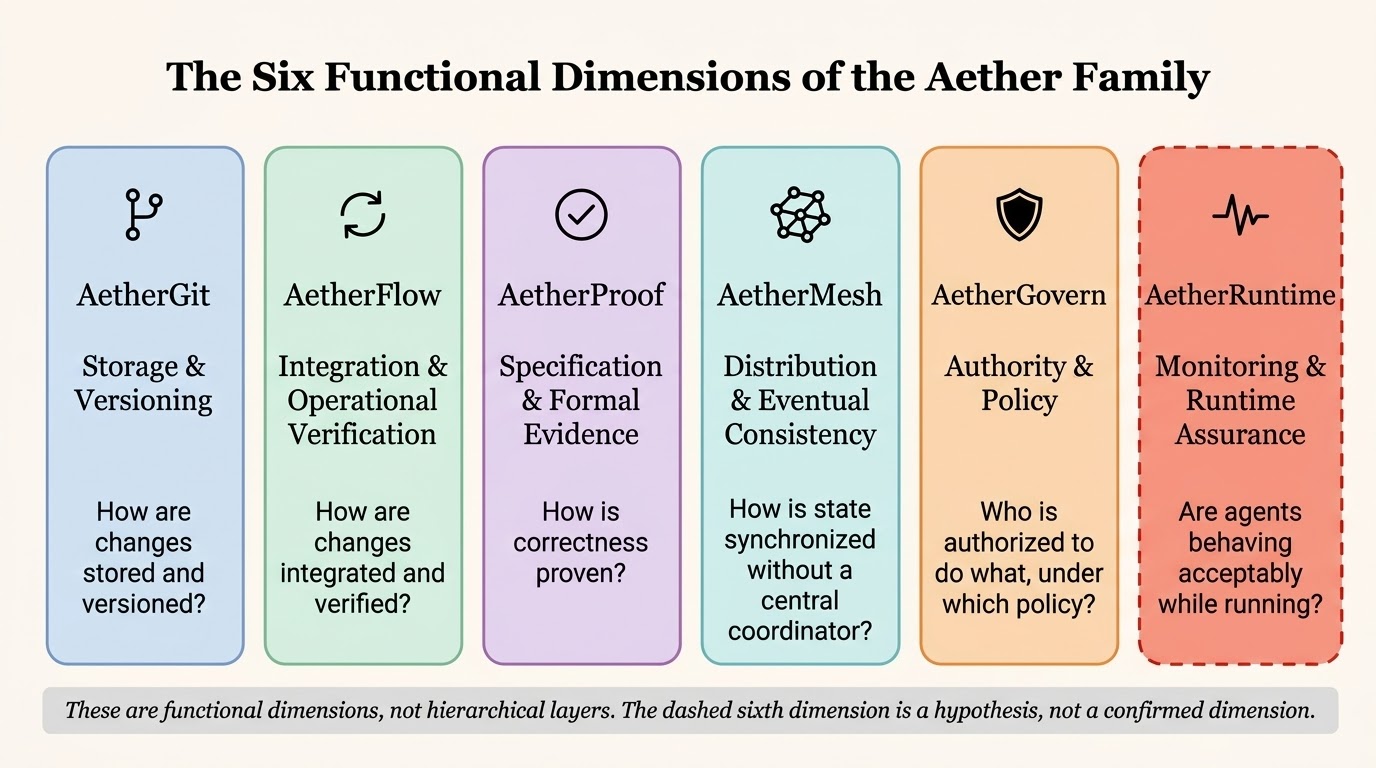
Figure 1 — The Six Functional Dimensions of the Aether Family. The sixth dimension (AetherRuntime) is a hypothesis under investigation, not a confirmed dimension.
Failure Conditions F1–F5
| ID | Claim under test | Status |
|---|---|---|
| F1 | Non-redundancy | Not falsified (R3, R4, R5) |
| F2 | Orthogonality to verification | Not falsified (narrowly) |
| F3 | Boundary with governance | Not falsified (decentralized setting) |
| F4 | Decentralizability | Not falsified (with residuals) |
| F5 | Observable benefit | Untested |
Propositions
| # | Proposition | Status |
|---|---|---|
| P1 | Determinism of Local Anomaly Detection | Proof sketch · implemented in code |
| P2 | Irreducible Halt Window | Proof sketch · implemented in code |
The Five Runtime Layers
| Layer | Question | Status |
|---|---|---|
| 1 — Monitoring | What is the agent doing? | Implemented |
| 2 — Detection | Is this behaviour anomalous? | Implemented |
| 3 — Containment | How do we isolate the agent? | Implemented |
| 4 — Halt | How do we stop the agent? | Implemented |
| 5 — Recovery | How do we restore the system? | Implemented |
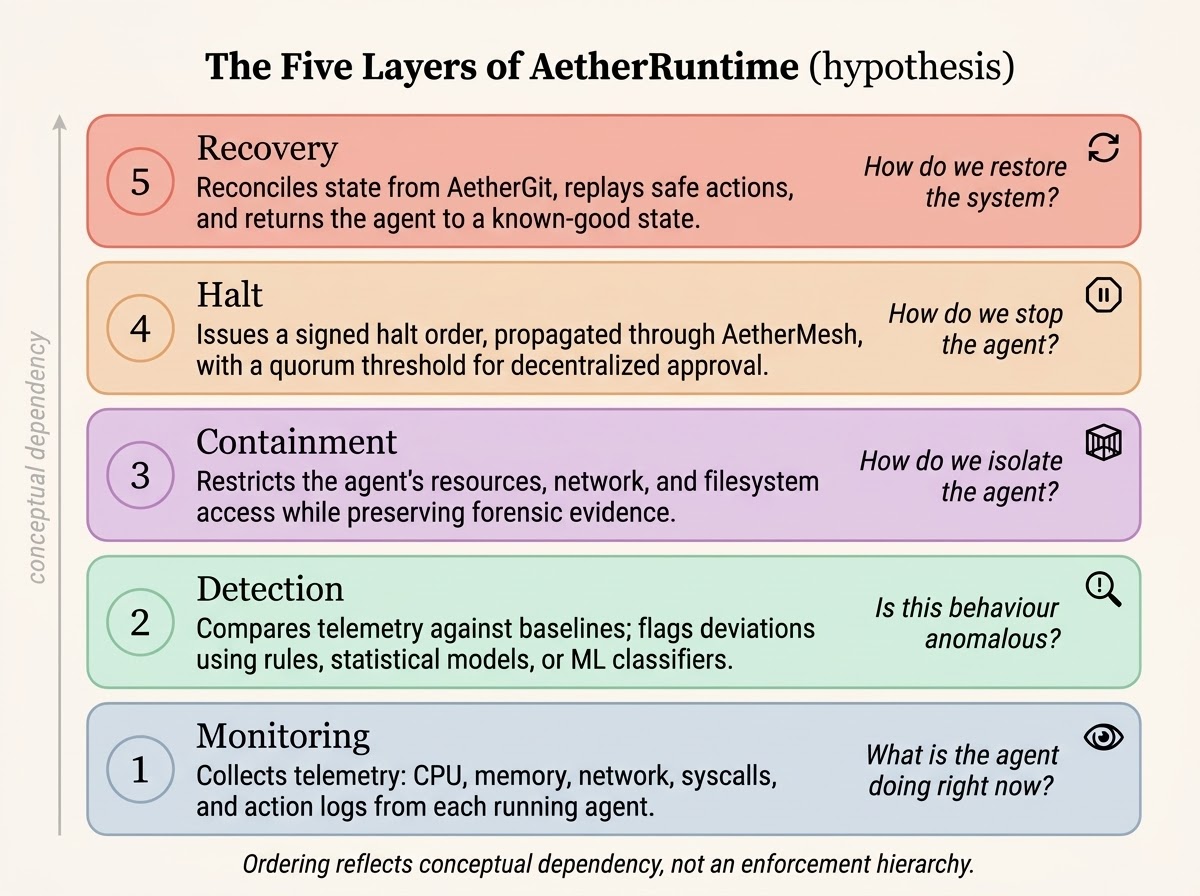
Figure 2 — The five layers of AetherRuntime (hypothesis). Ordering reflects conceptual dependency, not an enforcement hierarchy.
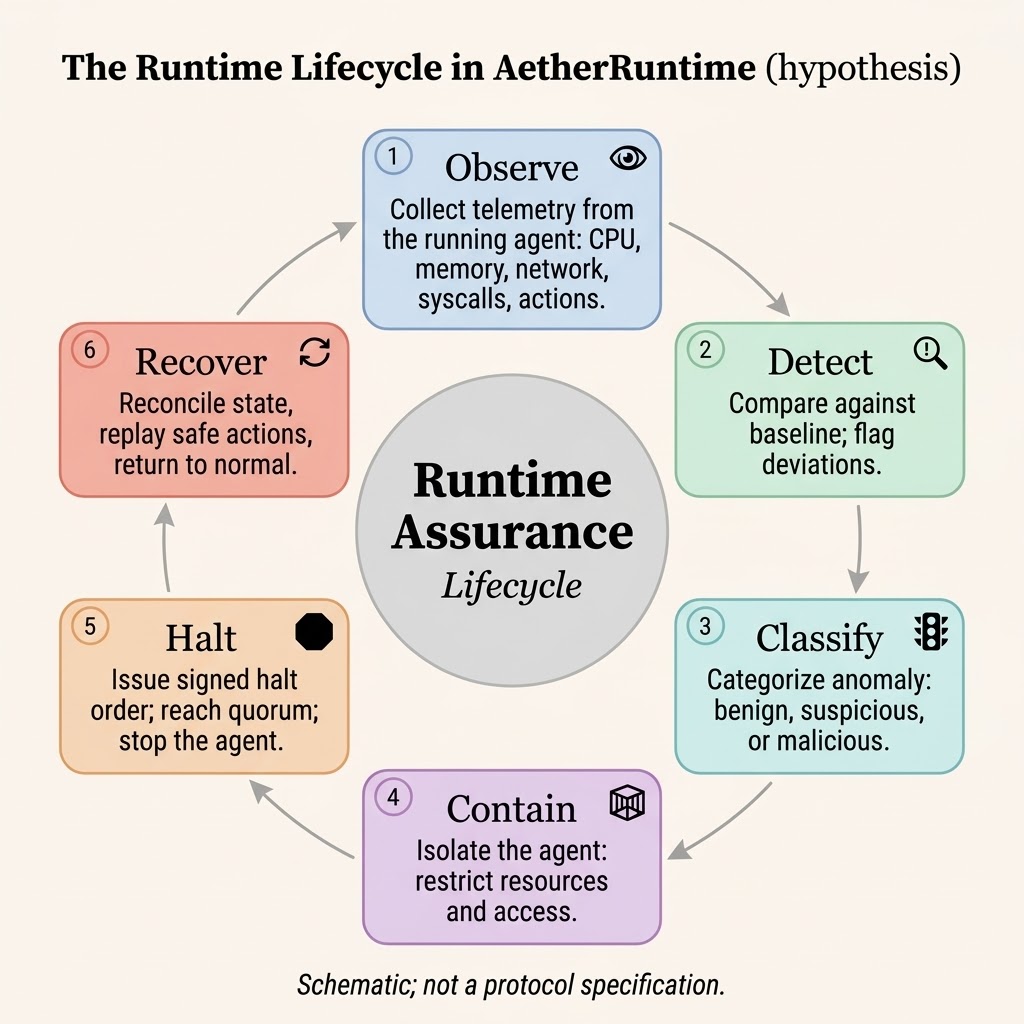
Figure 3 — The runtime lifecycle in AetherRuntime (hypothesis): observe, detect, classify, contain, halt, recover.
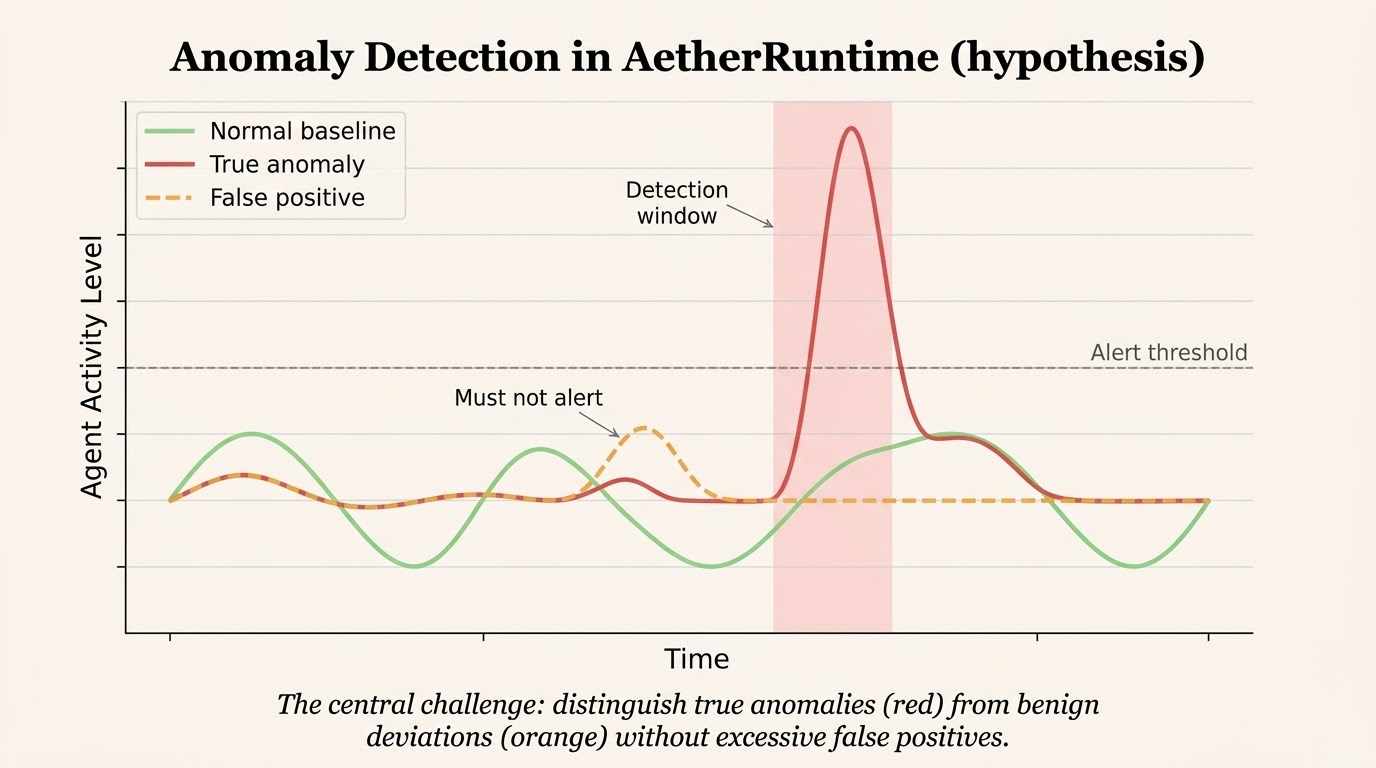
Figure 4 — The central challenge: distinguish true anomalies (red) from benign deviations (orange) without excessive false positives.
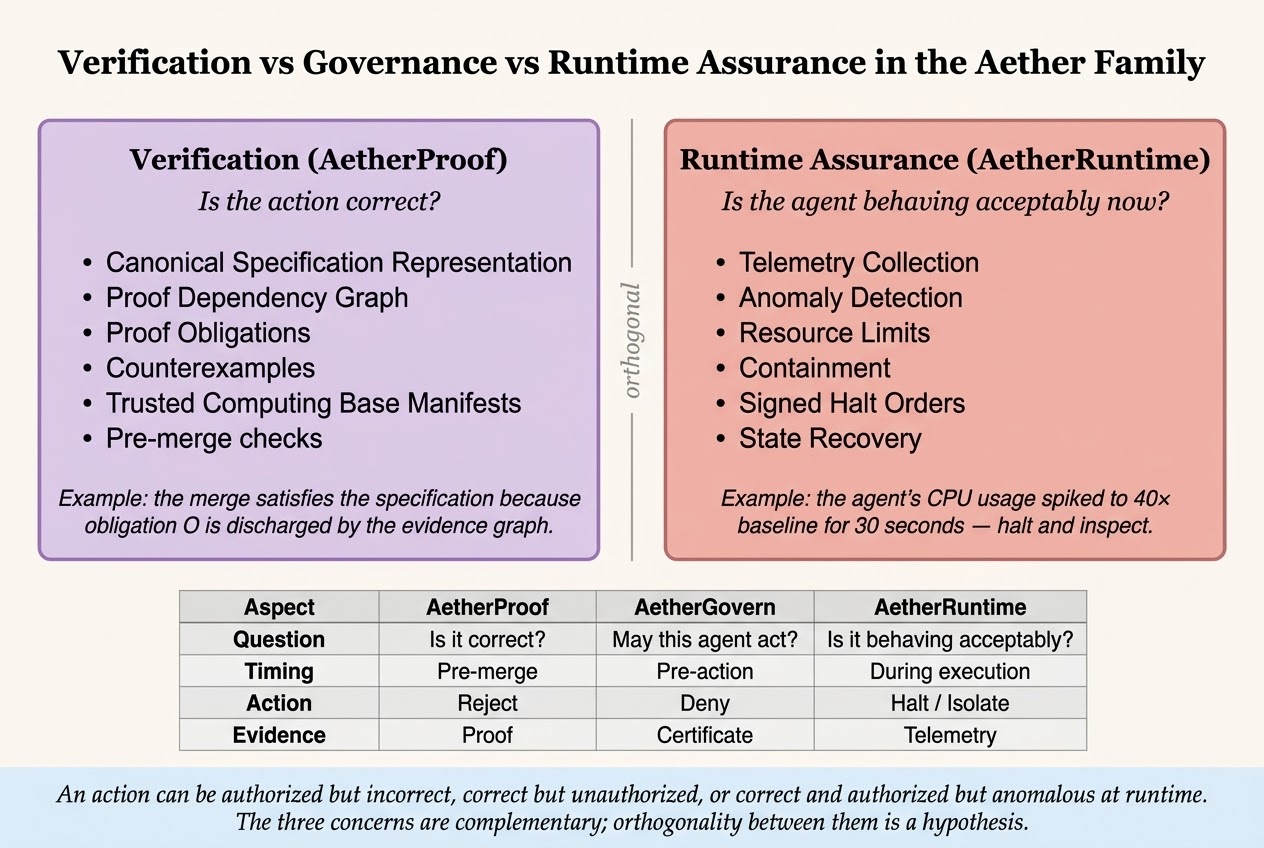
Figure 5 — Runtime assurance versus verification in the Aether family. Orthogonality is a hypothesis tested as failure condition F2.
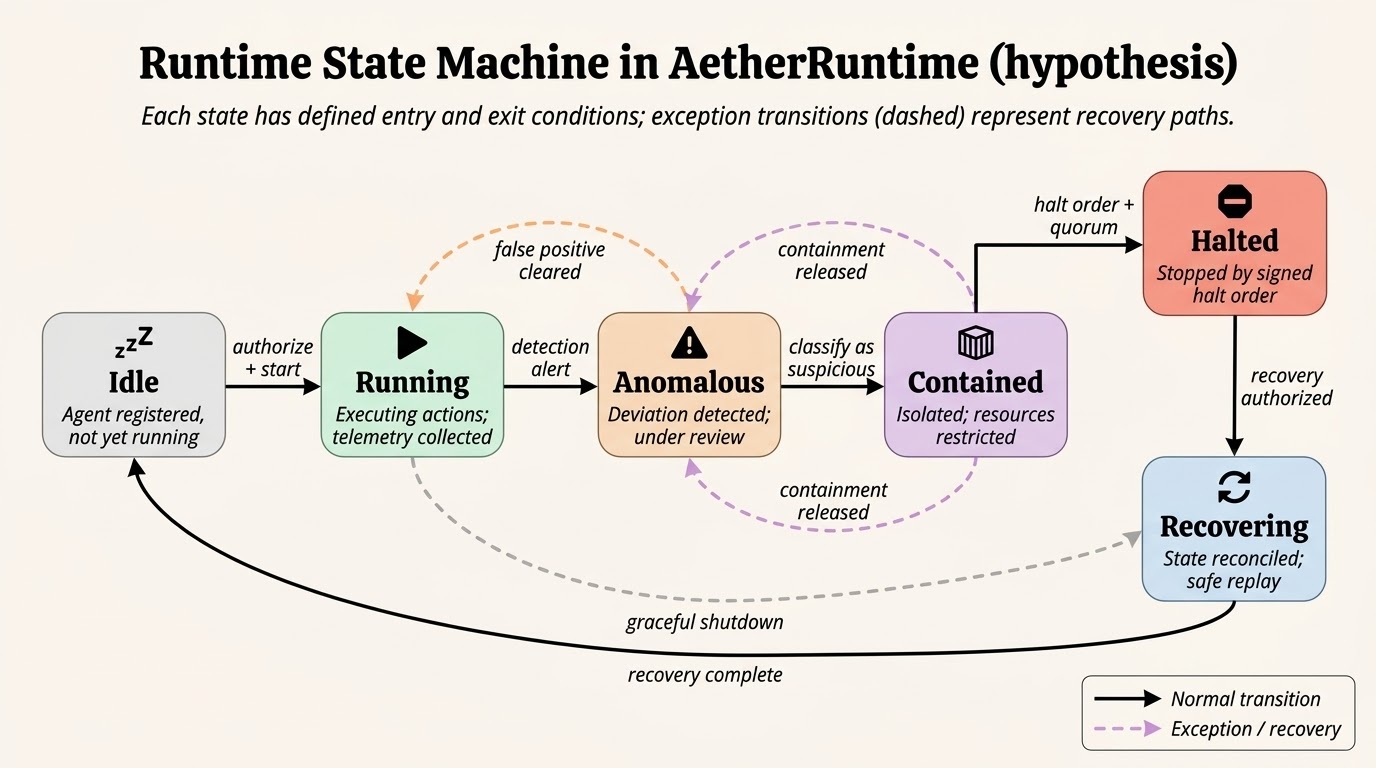
Figure 6 — The runtime state machine. Each state has defined entry and exit conditions; exception transitions (dashed) represent recovery paths.
v2.0.0 Experimental Results
| # | Experiment | Result |
|---|---|---|
| 1 | Detection Accuracy (M1, M2) | M1 = 109.67 (S1–S5 total); M2 = 7.33 (S6 false positives) |
| 2 | Halt Window (M5) | 10/10 enforced; mean window = 0.000243 s; median = 0.000220 s |
| 3 | Recovery Correctness (M6) | 10/10 verified; M6 = 1.0000 |